Radiologic Technology, A.A.S.
Radiologic technologists are vital healthcare professionals who use advanced medical imaging equipment to capture internal images of patients' bodies, directly aiding physicians in diagnosing and treating diseases and injuries. Throughout this program, students master essential radiographic technology while learning to prioritize radiation safety and deliver exceptional patient care.
Upon successfully completing the Associate Degree requirements, graduates are eligible to sit for the national certification exam administered by the American Registry of Radiologic Technologists (ARRT). Passing this exam grants the Registered Technologist—RT(R)—credential, which is required to enter the workforce.

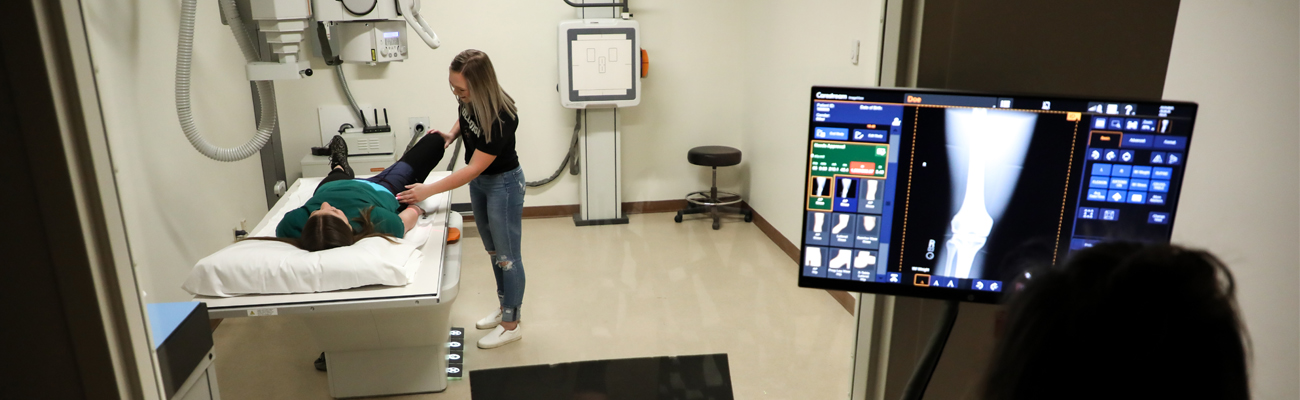
Highlands’ on-site radiography lab provides a fully functional X-ray room, allowing students to gain critical hands-on practice in a laboratory setting before applying their skills in a live clinical environment.
Learn by Doing
Our students learn by doing, spending their clinical hours fully immersed in the profession. Working directly alongside registered technologists, you will put your classroom knowledge into action and ultimately complete over 1,200 clinical hours at one of our affiliated regional healthcare facilities.
Upon successfully completing the Associate Degree requirements, graduates are eligible to sit for the national certification exam administered by the American Registry of Radiologic Technologists (ARRT). Passing this exam grants the Registered Technologist—RT(R)—credential, which is required to enter the workforce.
Job Shadow Verification
Program applicants must provide proof of a job shadow experience with a registered technologist.
Admission to Highlands College does not guarantee acceptance into the Radiologic Technology Program. Acceptance occurs through a formal and competitive selection process once program prerequisites are complete. Each spring if you have completed or are enrolled in all program prerequisite courses, you may submit an application to the program. A limited number of students are admitted each year, due to limited clinical space.
A selective GPA of required prerequisite courses (BIOH 201/202, BIOH 211/212, AHXR 100, HCI 316, M140 or M121, AHXR 104 or CHMY 121, WRIT 101 or WRIT 121) is calculated for each applicant as a part of the competitive selection process, therefore, the lowest GPA accepted varies each year dependent on the number of applicants and their final grades in the required prerequisite courses. The selective GPA makes up 75% of the selection criteria.
- CPR certification: Basic Life Support (BLS) certification, adult & infant.
- Background Check: Accepted student must submit a clear background check before clinical hours start.
- Letter of recommendation
- An essay
- Vaccinations: 3-part Hepatitis B series or positive titer; 2 MMR, varicella vaccination/history of chicken pox or positive titer; tDap within 10 years
-
Depending on clinical site assignment, some may further require:
-
Clear drug screening
-
Current season flu vaccination
-
2-part TB screening
-
-

ARRT Registry Exam for graduates in '23, '24, '25

A smart investment

With diverse healthcare experience
Students interested in completing their clinical hours through the Miles City satellite program are a separate applicant pool, submitting a unique program application – posted here each February. Accepted students have weekly, in-person labs held in Miles City, with all other coursework online or via Zoom. Clinical hours are completed at hospitals in the region (Miles City, Glendive or Sidney). Satellite students must complete the same prerequisites (or accepted transfer courses) to be eligible to apply for the program; prerequisites can be taken through Miles Community College and online through Montana Tech. Contact the radiologic technology advisor for further information.
Do you live in or near Montana's Electric City? Students interested in completing their clinical hours in Great Falls will fill out the same application as Butte area students, indicating on their application that Great Falls is their preference or they will consider it if offered. Great Falls area students attend Great Falls Clinic Hospital for clinical hours; in-person weekly labs are held in Great Falls, with all other coursework online or via Zoom. Students must complete the same prerequisites (or accepted transfer courses) to be eligible for clinicals in Great Falls. Contact the radiologic technology advisor for further information.
What Kinds of Jobs Do Radiologic Technologists Get?
A career in radiologic technology can lead in many directions, and there is strong demand for work across the country. Work settings after graduation can vary widely from hospitals, to clinics, physician offices, mobile units, education, management, research, public health, and sales or service of radiographic equipment. There also are many opportunities after becoming a registered technologist to specialize and gain certification in additional radiology modalities, including: MRI, computed tomography (CT), radiation therapy, mammography, nuclear medicine, interventional cardiac or vascular radiography, and sonography.


Projected through 2031

Number of projected annual job openings through 2031
Meet faculty, explore programs, and more.
We're proud of our strong career outcomes.
Our Radiologic Technology curriculum covers anatomy and physiology, imaging procedures, radiation safety, physics, biology, patient care, and healthcare ethics. View our catalog for a semester-by-semester degree guide.
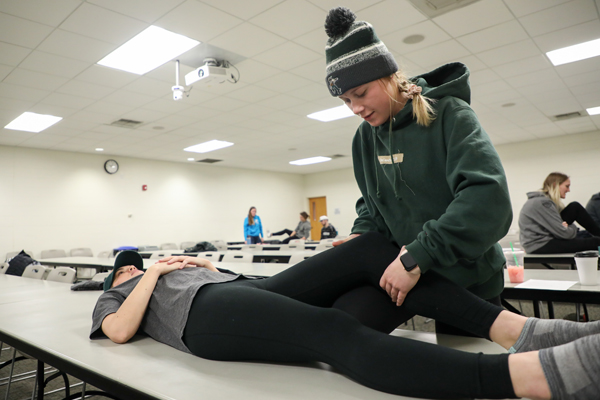
Gain a fundamental background in health, human performance and disease prevention.
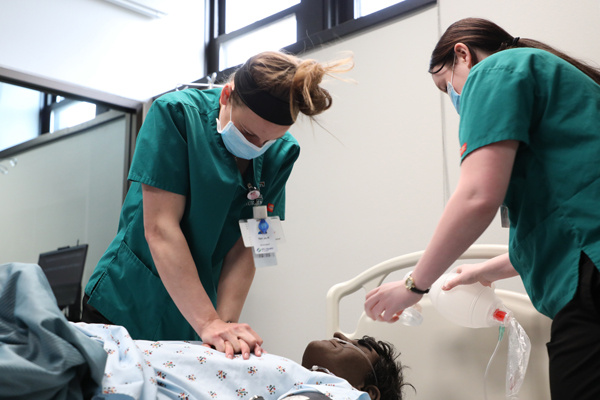
Earn your Bachelor of Science in Nursing degree from our award winning School of Nursing.
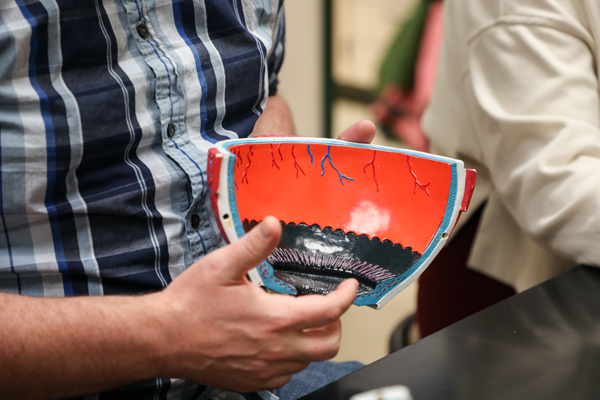
Launch a career in medicine, dentistry, occupational or physical therapy and more.
We can answer your questions and help you get started.
Instructor
tharp@mtech.edu
406-496-3759