Montana Tech, University of Szeged researchers find invasive plants do more harm together
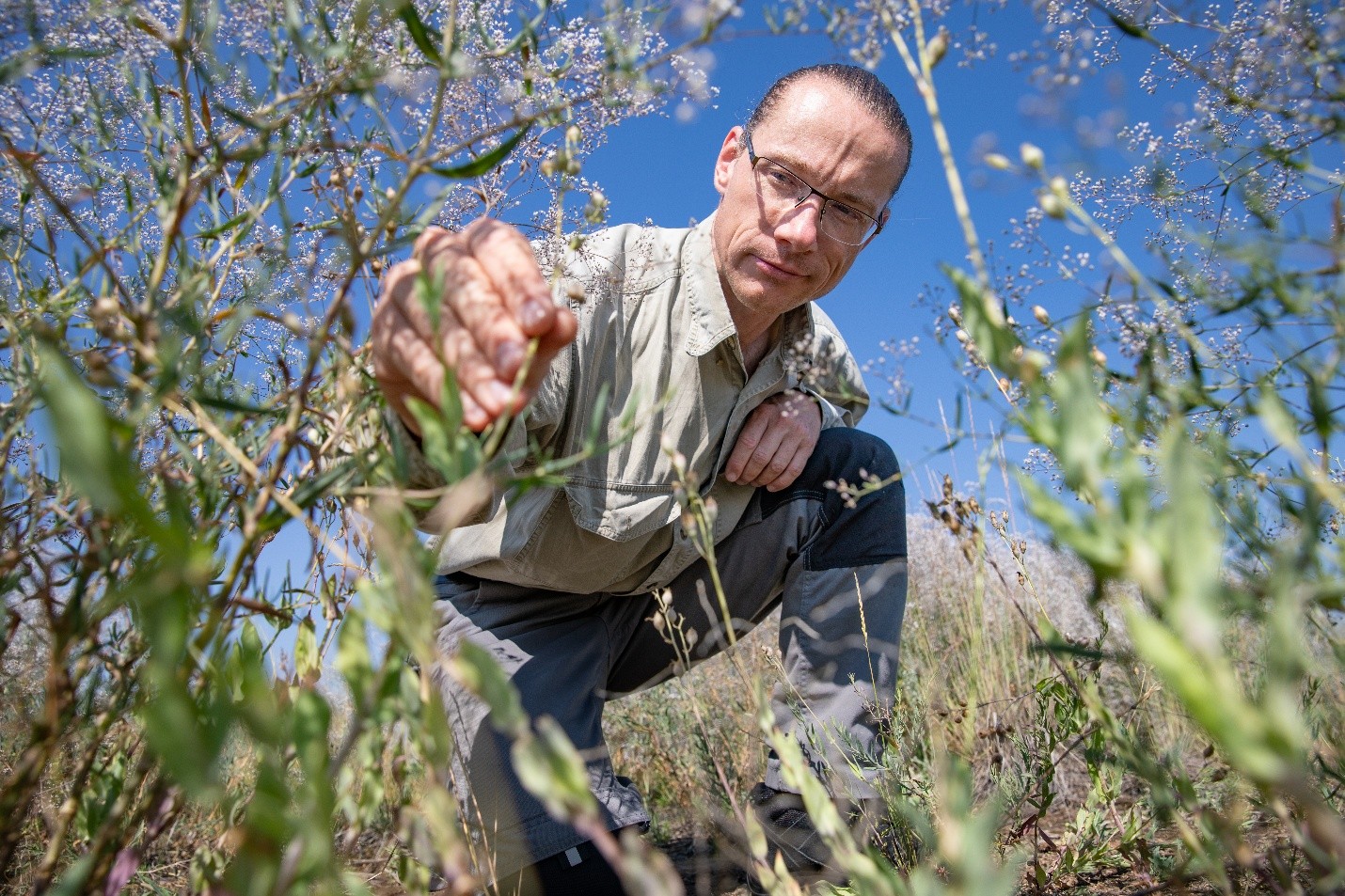
Dr. László Bakacsy conducts plant survey west of Montana Tech campus.
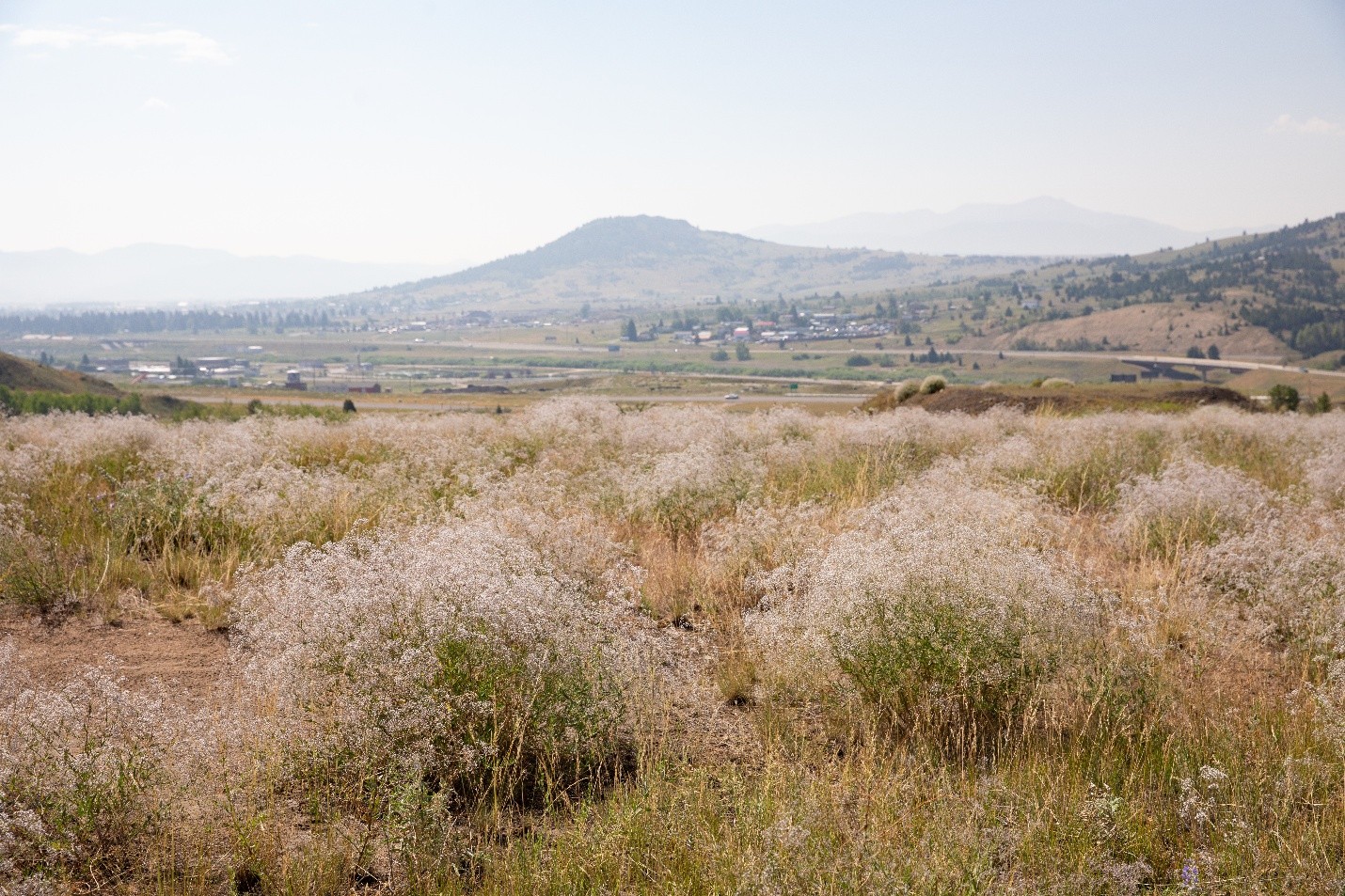
On an August day, west of Montana Technological University’s campus in Butte, a sea of white baby’s breath stretches across the landscape. The beautiful and delicate plant, an ornamental popular in flower arrangements and native to Eurasia, doesn’t look particularly menacing, but researchers say their impact on native grasslands they invade is anything but harmless.
Montana Tech Professor of Ecological Restoration Dr. Robert Pal and visiting researcher Dr. László Bakacsy spent part of the summer studying invasive plants west of campus, including baby’s breath (Gypsophila paniculata), spotted knapweed (Centaurea stoebe), yellowtuft alyssum (Alyssum murale) and smooth brome (Bromus inermis).
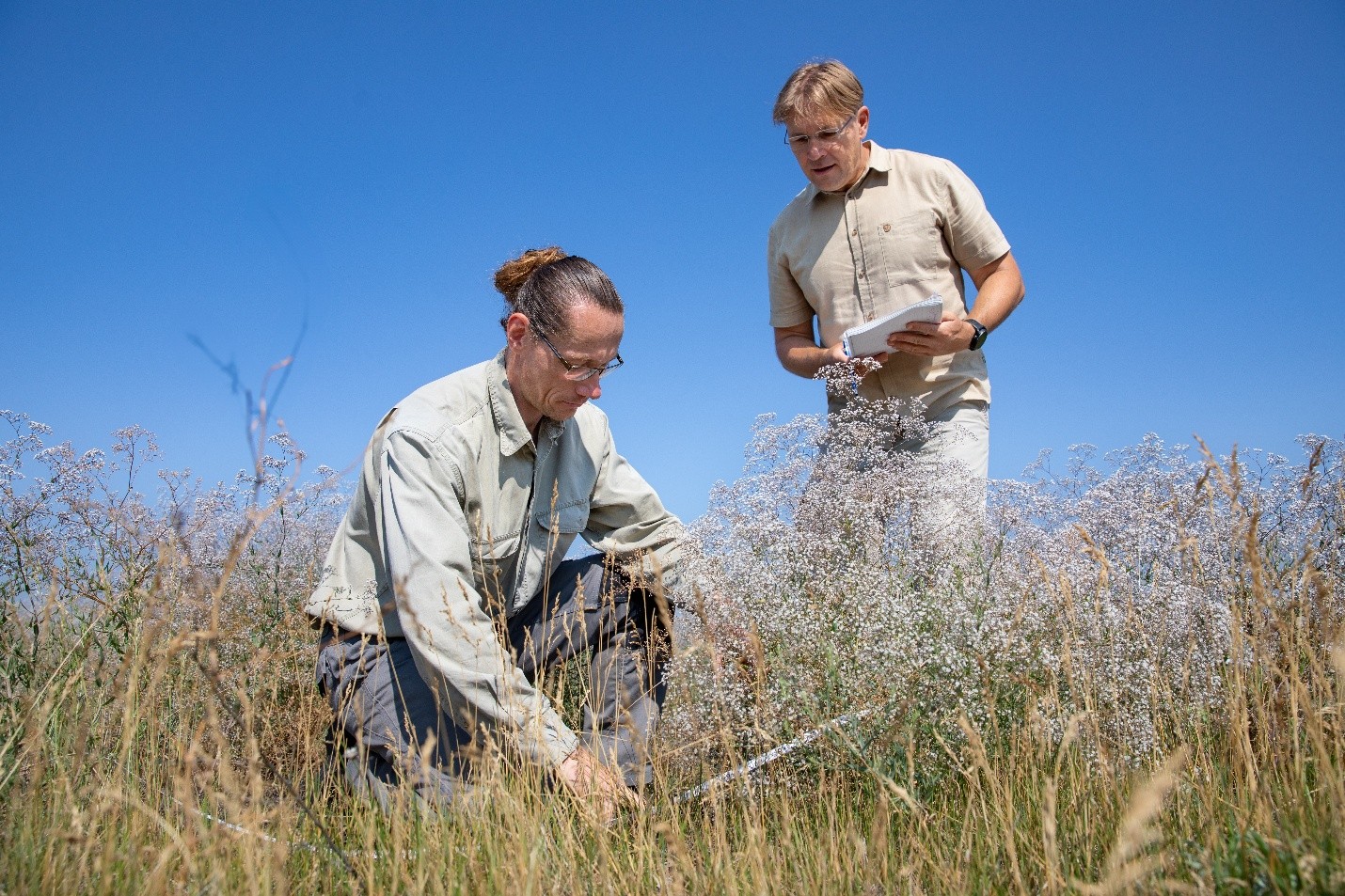
Dr. László Bakacsy and Dr. Robert Pal conduct transect surveys west of Montana Tech campus.
“Invasive plants are a big problem, not only in Europe, not only in America, it is a worldwide issue,” Bakacsy said. “It’s the second biggest threat to biodiversity.”
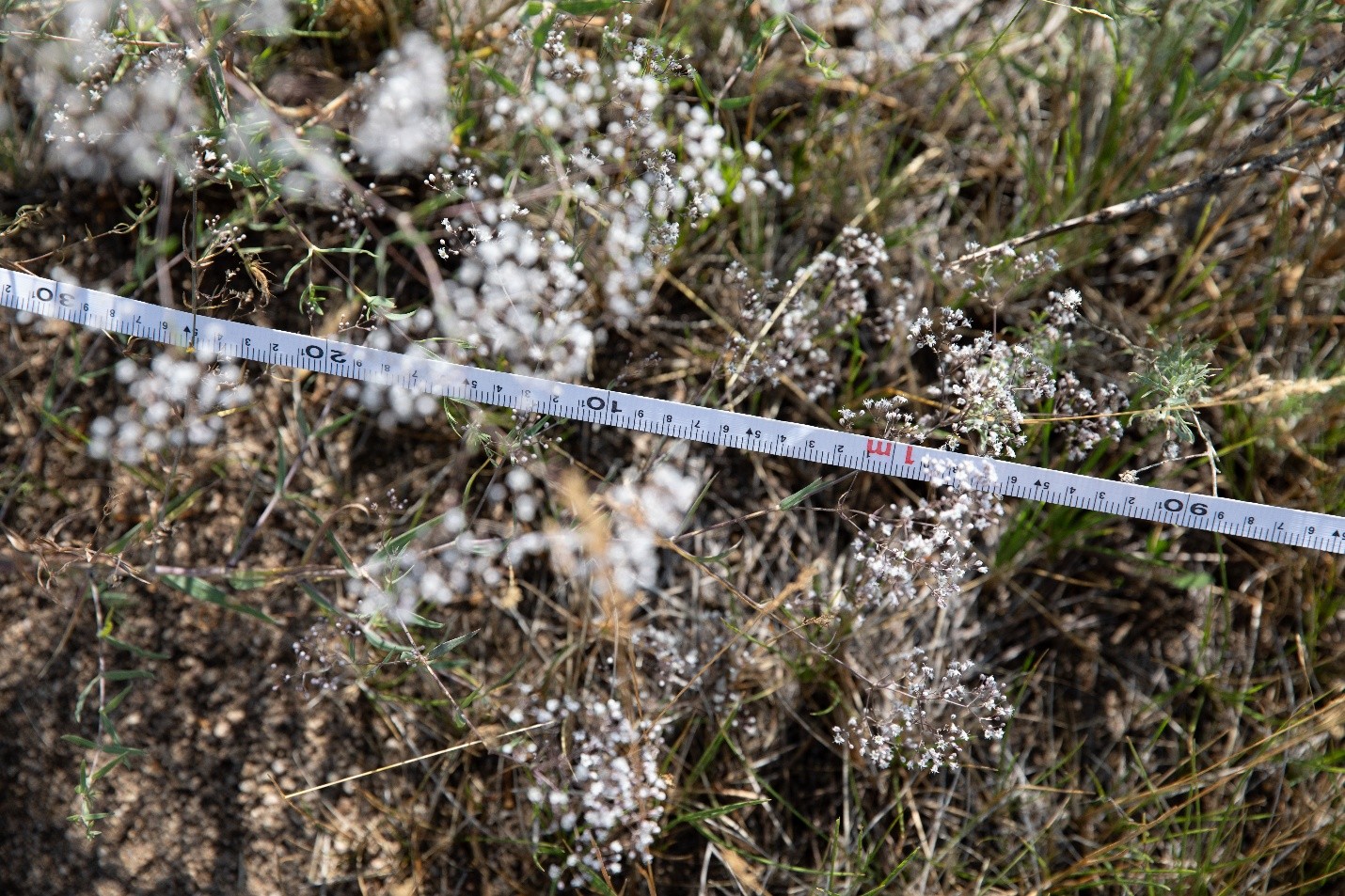
For two months this summer, Bakacsy conducted fine-scale vegetation surveys west of campus, taking measurements at 5-centimeter intervals along the boundaries between native and non-native vegetation. The standardized sampling method mirrors research conducted in Hungary, allowing researchers to eventually compare how invasive species affect plant communities in Montana and Central Europe.

A field of invasive baby’s breath west of Montana Tech campus.
Preliminary results could hold important information for land managers trying to combat invasive species. One early finding suggests the effects become more severe when multiple invasive species occupy the same area.
“We found the co-invasion is much worse for the native vegetation than if the invasive plant occurs alone,” Bakacsy said.
“We also found similar impacts in the case of a controlled greenhouse experiment published earlier this year,” Pal added.
Bakacsy is an assistant professor at the University of Szeged in Hungary. His research is funded by the Pannónia Scholarship Programme, a Hungarian government-funded international mobility program coordinated by the Tempus Public Foundation that provides global study, research, teaching, and traineeship opportunities for higher education students and staff.
The collaboration is designed to extend beyond Bakacsy’s summer in Montana. Researchers plan to compare data collected in Montana with similar research in Hungary’s Pannonian region, allowing them to examine how invasive plants affect ecosystems on two continents. The partnership also gives Bakacsy experience with research methods that can be replicated in Hungary and could lead to future joint research and publications between Montana Tech and the University of Szeged.
In addition to conducting research west of campus, Bakacsy also was able to travel to Yellowstone National Park and participate in Pal’s research there. He also was able to explore the culture, food, people, and landscapes of Montana.
“The people, students, and colleagues are very friendly and well qualified,” Bakacsy said. “I really enjoyed these two months in Montana and Montana Tech.”
Bakacsy was able to take his experiences back to his home university, where his colleagues were impressed by his presentation on his work in Montana. He is currently applying for grant funding, including to the prestigious Fulbright program, to hopefully return and continue his research.
The next step in the process is to take the results, apply restoration techniques, and try to identify best practices to restore the native landscape.