Montana Tech helps plug Montana's first oil well in remote Glacier National Park wilderness
When Glacier National Park needed to plug Montana's first oil well, located along the extremely remote shores of Kintla Lake, officials reached out to Montana Technological University for help.
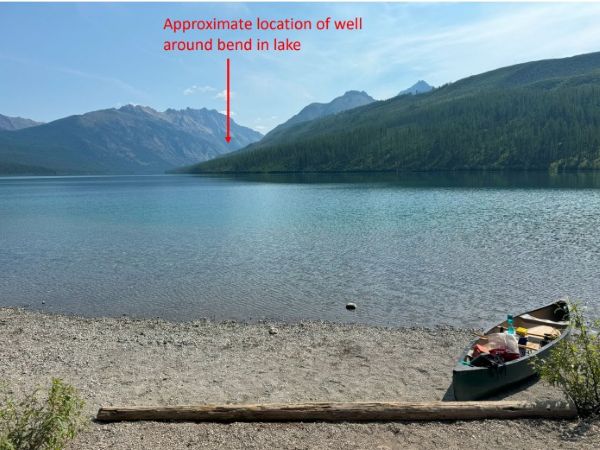
The project, completed in August, required transporting a drilling rig, cement pumping equipment and other heavy machinery into a roadless wilderness area, navigating strict environmental regulations and coordinating an operation that ultimately involved dozens of helicopter trips.
For Montana Tech Assistant Professor of Petroleum Engineering Dr. David Reichhardt, the project offered an unusual opportunity to combine his knowledge of the oil and gas industry with a piece of Montana history in one of the state's most spectacular landscapes.
"From a historical perspective, working in the park was interesting and fun," Reichhardt said. "It was a long time in the making, dealing with all the park regulatory issues."
Montana Tech helped oversee the approximately $1 million project, serving as a liaison between Glacier National Park and the contractor, Liquid Gold Well Services out of Cut Bank, Montana, was responsible for plugging the historic well. Reichhardt served as the project's principal investigator, coordinating contract management and oversight.
The well's history stretches back more than a century, long before Glacier National Park was established in 1910.
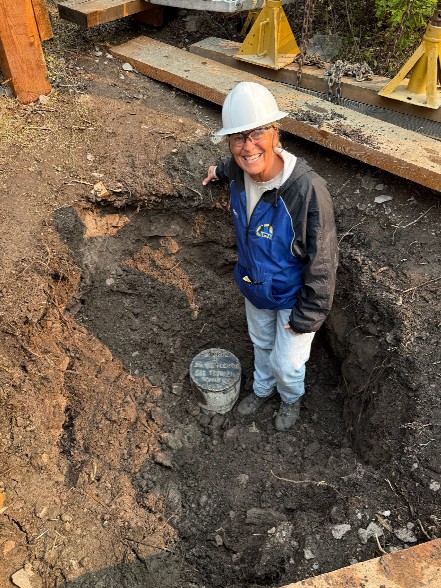
According to the National Park Service, oil claims in the Kintla Lake area were first recorded in 1892. The Butte Oil Company was established in 1900, and drilling began in November 1901. The operation encountered numerous setbacks, including a broken drill stem at a depth of 1,000 feet in 1902. The well eventually caught fire and was abandoned.
More than a century later, a survey detected gases leaking from the historic well, raising concerns about potential environmental impacts. The National Park Service determined that plugging the well was necessary to reduce methane emissions, prevent fluids and chemicals from migrating between geological formations and potentially reaching Kintla Lake, and address physical hazards at the site.
"There's a need to make sure that the abandoned oil and gas wells are properly plugged and abandoned so that they don't emit methane and other gases out into the atmosphere," Reichhardt said. "And there's a lot of these wells that need to be plugged."
The Kintla Lake well presented an especially challenging case because of its location.
Reaching Kintla Lake Campground requires traveling approximately 14 to 15 miles on a dirt road from Polebridge, a small community near the park's northwestern boundary. From there, the well site is another six or seven miles away, near the opposite end of the lake, with no road access.
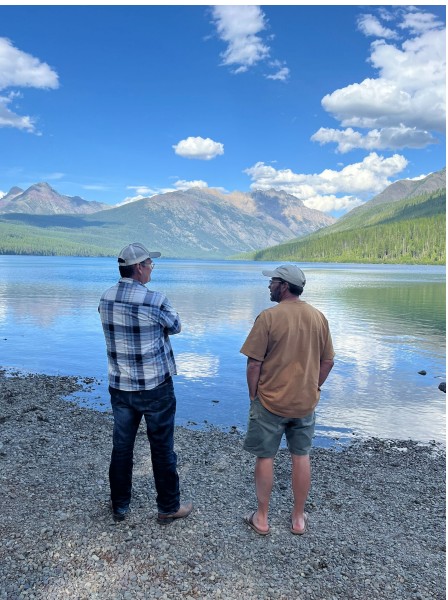
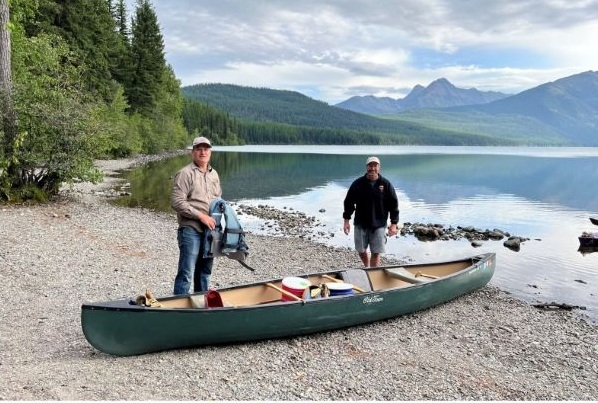
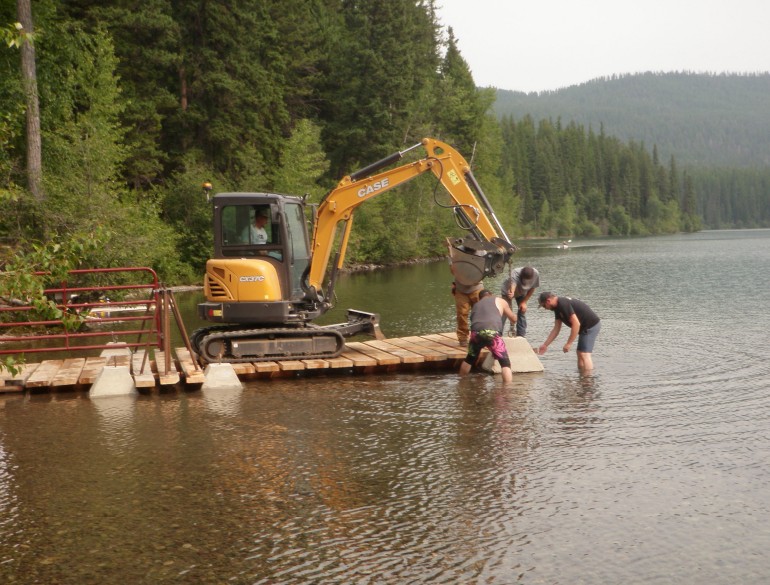
Reichhardt made approximately four trips to the area before the plugging operation began, sometimes camping at Kintla Lake and other times staying in cabins in Polebridge. He reached the site by hiking and canoeing, and eventually by motorboat after the National Park Service granted special permission for its use.
"Just to get to the well site is a lot of work," Reichhardt said.
Getting the heavy equipment there was an entirely different challenge.
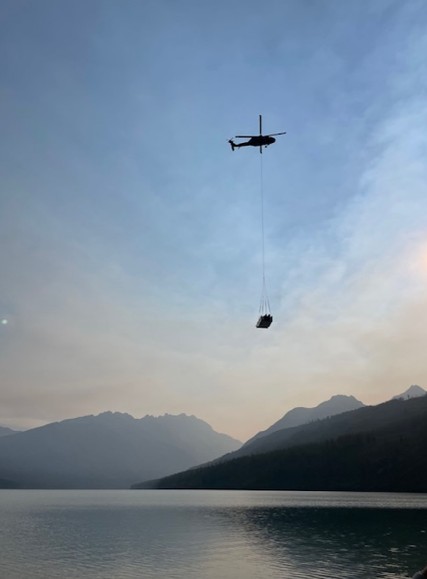
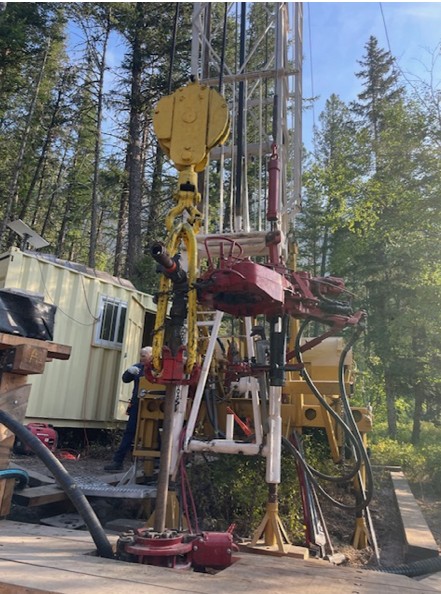
A Black Hawk helicopter was used to transport machinery and supplies to the site. Because of weight restrictions, equipment had to be disassembled into smaller loads before being flown into the wilderness.
The drilling rig was transported in three separate pieces, while cement pumping units and supporting equipment required additional trips. Reichhardt estimated that approximately 11 helicopter loads were needed to bring equipment into the site, followed by about 13 loads to remove everything once the work was complete.
The remote location, combined with the park's environmental protections, required extensive planning before work could begin.
"It was in a roadless wilderness area, so there's a lot of issues associated with that," Reichhardt said. "The helicopter work, getting all the equipment in, was a big deal."
Despite the logistical challenges, the actual plugging operation went relatively smoothly once the equipment was in place.
Reichhardt was on-site before the equipment was flown in, while Montana Tech colleague Mary North-Abbott, PE was on site for all of the plugging work, from mobilization through the plugging and demob to site restoration and GNP field inspection. Dr. Todd Hoffman was present for portions of the plugging work. North-Abbott is a former Montana Tech associate professor of petroleum engineering and owner of MANA Consulting, LLC. Hoffman serves as associate professor/department head of petroleum engineering.
North-Abbott said the project began when a Montana Tech alumnus--the lone National Park Service petroleum engineer--reached out to the university for support.
“For me, this project was a chance to work with my former Montana Tech colleagues and a former student,” North-Abbott said. “It was amazing to get to be involved with this project for almost three years and to see it go from the initial budgeting, planning and site visits, to the contractor selection, field implementation, and finally the site reclamation. To boot, I had the opportunity to go to work every day for three weeks in this majestic setting. Seeing Kintla Peak emerge as we boated along the lake to the site each morning was breathtaking; and I got to see the sunrise and wildlife right outside my cozy one-room cabin every day.”
North-Abbott also complimented the team that made the project possible.
“The contractor, Liquid Gold, and crew from Cut Bank were top-notch; not only were they experienced and professional, they were also creative problem solvers, which came in handy at the remote location,” she said. “It was also interesting to interact with the National Park Service personnel on site and the folks hiking the trail…most were curious and interested to hear about the project and were surprised at the location of an oil well in the middle of a back-country campground, as well as the small footprint for all the equipment and operations to plug the well."
Hoffman noted how unique the project was.
"What an amazing project to be part of,” he said. “When the alumnus contacted us, we jumped at the opportunity. In the oil industry, we don’t always get to work in such majestic locations, and with ties to the history of oil in Montana, and even the well name, Butte Oil #1, it all made sense that Montana Tech should be partners in this project."