
College of Letters, Sciences, and Professional Studies (CLSPS)
The College of Letters, Sciences and Professional Studies (CLSPS) is your launchpad for careers in science, technology, and health. Here, you don’t just choose a major—you build a future. Our customizable degrees allow you to fuse rigorous technical training with studies in business and the humanities, tailoring your education to your exact career goals.
Explore our diverse programs and build the market-ready skills you need to exceed your expectations.

Career Outcomes Rate
Montana Tech Outcomes Survey, 2025

Kollegio, 2026

Niche.com,2026

Launch your career in medicine, veterinary care, wildlife biology, or graduate research with a Biological Sciences degree from Montana Tech—your gateway to endless possibilities.

This program strengthens core business principles while integrating cutting-edge information technology and systems management. Students can specialize in accounting or Management Information Systems (MIS).

Students can choose from several areas of specialization, including biochemistry, environmental environmental chemistry, and a professional option.

Driven by the AI boom, market demand for data scientists is soaring. Our BS and minor in Data Science integrate with every science and engineering discipline to equip you for an exciting future.

Deeply understand the science of human movement to prepare for a career in medicine, physical therapy, healthcare, or physical training.

The Department of Chemistry and Geochemistry offers a M.S. degree in Geochemistry.

Earn a well-rounded and multidisciplinary degree from a program that mixes science with the arts.

This degree prepares students for in-demand, high-paying careers. Focus on pure math, applied math, or statistics with this versatile degree.

Step into the rewarding, fast-paced world of healthcare by earning your nursing degree at Montana Tech.

The Writing Program helps students develop effective communication skills for academic and professional success.

The pre-dentistry program provides the science pre-requisites for acceptance into dental school.

Focus your undergraduate studies on pre-law requirements.
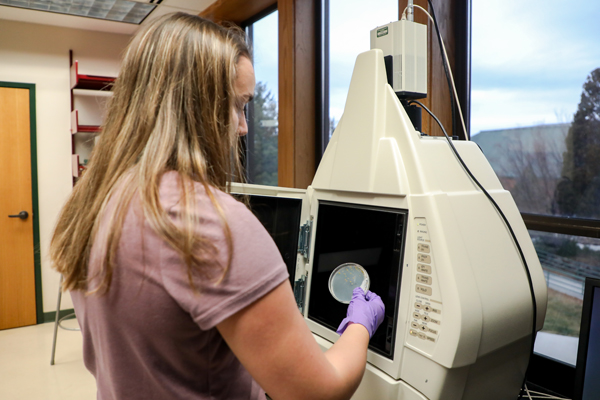
An MPH degree trains professionals who tackle health issues that impact entire populations.
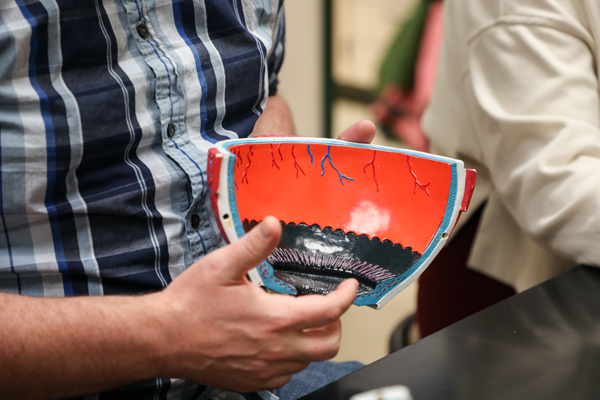
The pre-med program is a focused set of courses to qualify you for medical school.
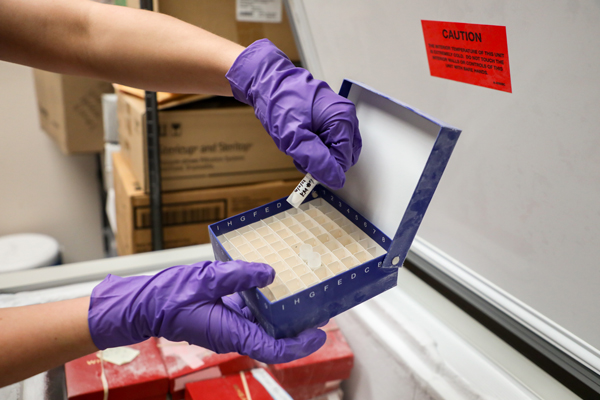
Montana Tech has a long history of preparing students for placement into pharmacy programs.
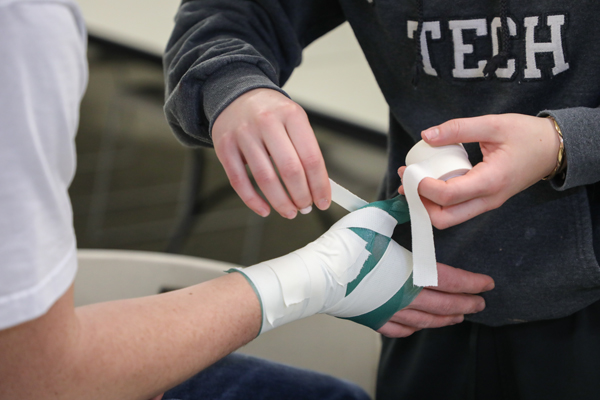
Pre-physical therapy students typically major in Exercise and Health Science or Biological Sciences.

Montana Tech’s faculty helps you tailor a plan of study to gain acceptance into physician's assistant programs.

This focus area is a gateway to a career in health or medicine like optometry, pharmacy, respiratory therapy, etc.

Montana Tech's strong Pre-Veterinary Medicine program has produced many practicing veterinarians.

Faculty do more to determine the quality of your college experience than anyone. Here you will find dedicated and knowledgeable faculty, whose first priority is to give you an outstanding education that prepares you for success.
If you’re passionate about research, consider an undergraduate research project (URP) supported by grants from industry, the National Science Foundation, and the University. You can even earn a stipend!
Accreditation varies by department. Please visit each program page for accreditation information.
If you’ve already earned your baccalaureate degree and are seeking entry to graduate school, start at Montana Tech. Two majors in the College of Letters, Sciences, and Professional Studies are available as master’s programs.
View departmental one-pagers for an overview of programs and pathways.
We can answer your questions and help you get started.
(406) 496-4791
admissions@mtech.edu